For digital healthcare providers – whether you are building a dedicated rehab and PT platform or simply adding a musculoskeletal (MSK) module to a broader virtual care ecosystem – the “build vs. buy” decision is critical.
Based on Kemtai’s architecture and regulatory status, here are the top 5 advantages of using Embeddable UX Components combined with Data APIs to scale your offering.

1. Instant Expansion of Your Care Offering
Speed is essential in digital health. Whether you are a telemedicine provider, a chronic condition management platform, or a wellness app, building a proprietary computer vision motion-tracking engine is a massive R&D undertaking.
- Plug-and-Play MSK: Embeddable components allow you to instantly “switch on” a high-quality physical therapy module within your existing app.
- Focus on Your Core: By integrating a ready-made motion tracking UI, your engineering team can remain focused on your platform’s primary value proposition—whether that’s holistic care management, telemedicine, or insurance coordination.
2. Medical Device Grade Compliance (FDA Listed & CE Marked)
In the healthcare sector, trust and compliance are non-negotiable. Unlike generic fitness tools, Kemtai’s embeddable components are designed for clinical rigor.
- Regulatory Confidence: Kemtai’s components are FDA listed and CE marked, meaning you are integrating a solution that meets medical device standards.
- Clinical Validity: The system utilizes specific UDI-DI (Unique Device Identification) tracked components, ensuring that your patient-facing exercise tools meet the quality and safety standards required for digital therapeutics.
3. Power Advanced Analytics with Direct Data APIs
While the embeddable components handle the complex UI of motion tracking, the Backend Data APIs offer the flexibility needed for deep personalization and population health analytics.
- Raw Data Access: Beyond just showing a “completed” status, the API endpoints allow you to capture raw patient and protocol data.
- Personalized Care Paths: You can leverage this granular performance data to feed your own internal algorithms, enabling you to programmatically adjust care plans, trigger specific interventions, or personalize health nudges based on actual movement quality.
4. A Seamless, White-Labeled User Experience
For broad digital health platforms, maintaining a consistent brand identity is vital. You don’t want your users to feel like they’ve been handed off to a third-party vendor.
- Native Look and Feel: The embeddables are designed to blend perfectly into your host application. You control fonts, colors, spacing, and border radiuses, ensuring the MSK module looks and feels like a native part of your ecosystem.
- Preserve Your Brand Equity: Your logo and design language remain front and center, while the complex computer vision technology runs invisibly in the background.
5. Holistic Workflows for Patients and Providers
Effective digital healthcare requires connecting the patient’s home experience with the provider’s clinical oversight. The ecosystem supports both sides of this equation:
- For the Patient: A guided, interactive exercise interface that runs in the browser or app, providing real-time corrective feedback (e.g., “Bend more to the left”).
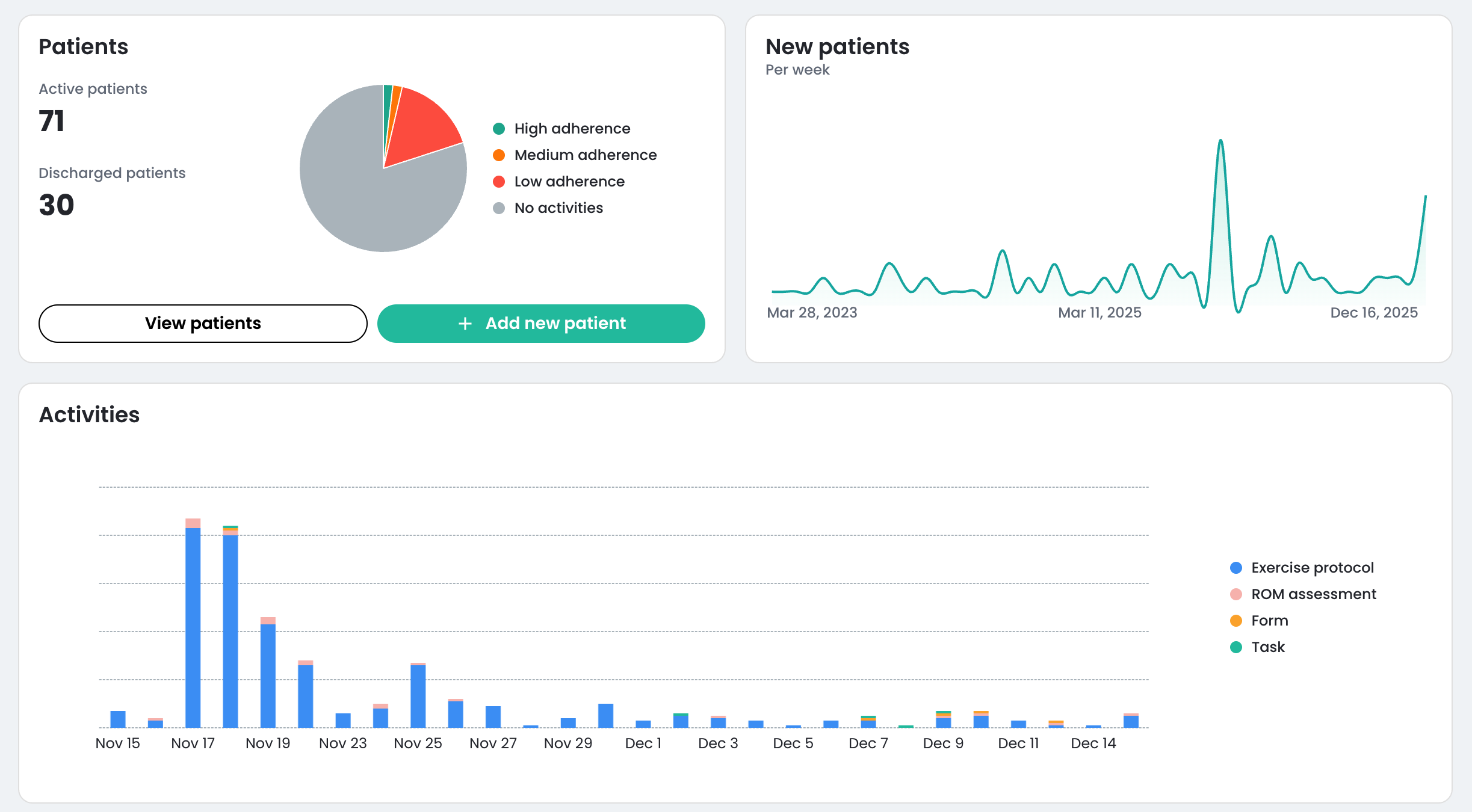
- For the Clinician: Dedicated clinician-facing embeddables can be inserted directly into your provider portal, allowing doctors and therapists to prescribe protocols and review detailed adherence data without ever leaving your platform.