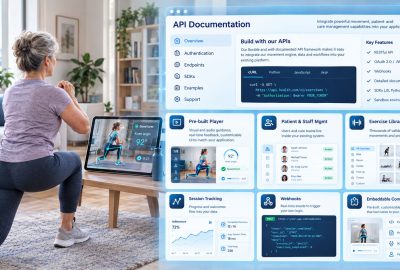
The last post touched on API framework depth. This one is about a specific piece of it that deserves its own spotlight: Embeddable Components. For a lot of health and wellness teams, the real bottleneck isn’t wanting to add movement tracking, it’s the build time.
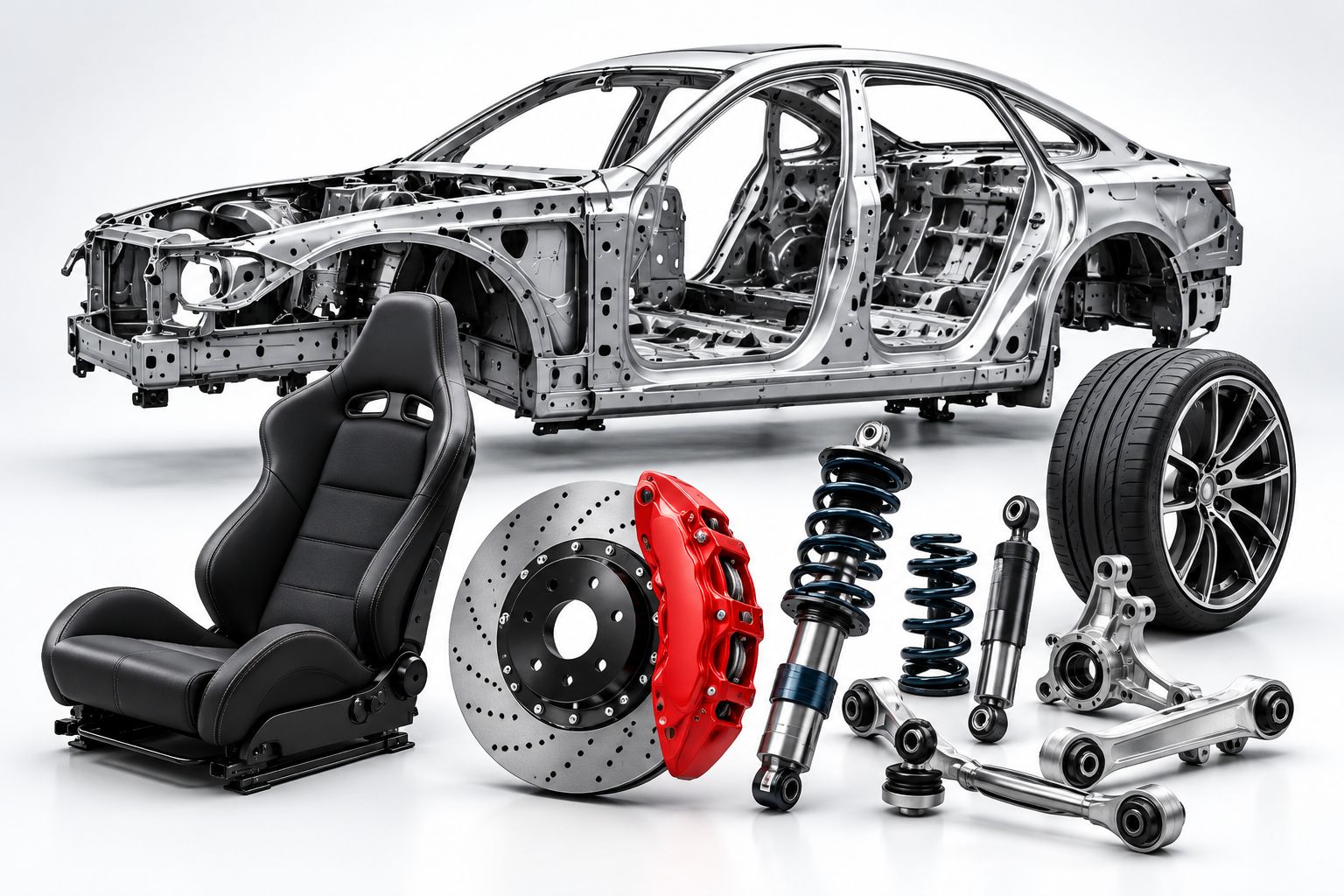
Leading car manufacturers understand this instinctively. They build an incredible product end to end, but they don’t insist on building everything themselves. They choose Recaro for seats, Brembo for brakes, B&O for the sound system, because those companies have spent decades perfecting that one component, and the result is a better car, faster to market, at a better cost than reinventing each part in-house. Digital health and wellness apps face the same choice with movement tracking.
Designing an exercise player, wiring up real-time feedback, building patient-facing screens for assessments and progress, then testing all of it for accuracy – that’s months of engineering before a single user sees value. Embeddable components remove that step. The exercise experience, the feedback and scoring UI, patient activity views, even staff-facing tools, come pre-built and are just skinned to match your app’s look and feel. What would’ve been a multi-quarter build becomes a matter of weeks.
That speed isn’t the only thing that changes. Because the components are the same ones already proven across a wide range of live deployments, you’re shipping an experience that’s already been validated for adherence at scale.
Instead of paying engineers to build and continually refine a movement UI from scratch, you’re paying for something that’s already been through that iteration, with the maintenance and updates handled outside your roadmap.
This is where a lot of teams get the build-versus-integrate decision wrong. They assume integrating means giving up control over the experience, when in practice it means inheriting an experience that already works, adjusting it to your needs and spending your engineering time on what actually differentiates your product instead of rebuilding a movement player from zero.